Showing posts with label green building. Show all posts

Wednesday, December 11, 2013

Concept houses showcase French design pioneers and modern-day Miami designers

A view of the Charlotte Perriand cabana recreated at the Raleigh. CARL JUSTE / MIAMI HERALD STAFF

Read more here: http://www.miamiherald.com/2013/12/06/3800047/concept-houses-showcase-french.html#storylink=cpy
Since their start decades ago as architectural laboratories, concept houses have been venues for exploring new ways of living, building and designing — think of modular construction, open floor plans and “green” building — or simply for dreaming.

In tandem with such Utopian-tinged experiments, a more commercial permutation of the concept house has evolved — as a showcase for furnishings, housewares, fixtures and the design professionals who put them together.

Thanks to Art Basel, Miami Beach, we’re getting a glimpse at formidable, if distinct, examples of each.

The first is the installation, 80 years after its conception, of a simple yet refined prefab cabana by the groundbreaking French Modernist furniture designer and architect Charlotte Perriand.

In the unlikely setting of a seagrape grove behind the Raleigh Hotel in South Beach, Perriand’s elegant, practical design — it won a magazine prize in 1934 but was not built in her lifetime — has been exquisitely realized by French fashion house Louis Vuitton for Art Basel’s companion fair, Design Miami.

Inside the Design Miami tent adjacent to the Miami Beach Convention Center is a second, rustic prefab house, this one by French design legend Jean Prouvé, with whom Perriand collaborated on furniture designs. In use for 50 years, the Prouvé house was purchased, dismantled and then reassembled after minimal renovation by a French design gallery.

Both prefab houses are for sale to collectors, who increasingly covet such architectural artifacts of mid-20th century design.

Across the Beach on Sunset Island II, Elle Decor magazine has unveiled its Modern Life Concept House — a spare, contemporary waterfront spec manse that has been brought to pulsing life by eight interior designers and garden designer Fernando Wong. Five of the designers, including Wong, are based in Miami, and a sixth splits his time between Miami Beach and New York City.

Though not as consequential as the Perriand or Prouvé designs, the Elle Decor house does make the point that in the hands of skilled designers, the interiors of the houses on steroids popping up along the Beach waterfront can strike a lighthearted but still elegant balance between sterile minimalism and gaudy excess. (Miami designer Sam Robin makes the focal point of the black-and-white living room a near life-size black horse with a black lampshade protruding from its head.)
The living room designed by Sam Robin for the Elle Decor house. CARL JUSTE / MIAMI HERALD STAFF

Read more here: http://www.miamiherald.com/2013/12/06/3800047/concept-houses-showcase-french.html#storylink=cpy

Proceeds from the $35 admission fee, plus a $15,000 donation from the magazine, go to the University of Miami’s Sylvester Comprehensive Cancer Center.

Perriand’s “La maison au bord de l’eau” — “the house at the edge of the water” — is a couple’s cocoon that manages to be both airy and cozy. At 1,076 square feet, the six-room structure is smaller than a double-wide and sleeps two comfortably, but could accommodate up to six vacationers, said French historian and author Jacques Barsac, who is married to Perriand’s daughter, Pernette Perriand-Barsac.

The couple worked closely with Vuitton, which used the designer’s pared-down aesthetic as inspiration for its upcoming women’s collection, to flesh out and build Perriand’s blueprint. Meant to be easily dismantled and moved, it was among the first prefab houses intended for mass production. Designed to capture rainwater for domestic use and tread lightly on the ground, the house was also an early stab at eco-friendly design.


(2013 December 06) Concept houses showcase French design pioneers and modern-day Miami designers. Retrieved on December 10, 2013 From MiamiHarold.com

Wednesday, July 3, 2013

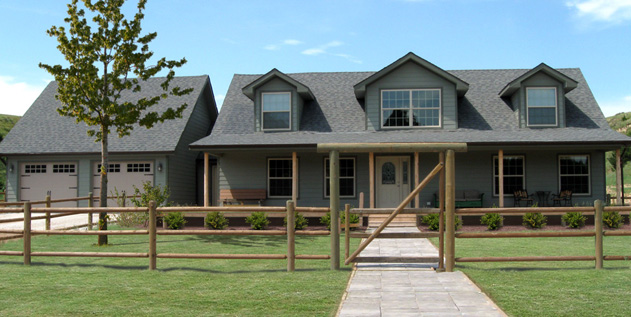
Going Green With Modular Homes

green modular homes
There are more products in the marketplace that allow consumers to be environmentally responsible than ever before. These products range from cleaning products to modular homes. Homes can actually be constructed with a green initiative in mind. This includes everything from the construction of the panels to the energy efficiency of the finished home.
Many of the modern modular homes are built to use less energy. There may be solar panels on the roof or thicker layers of insulation on the sides of the home. When there is less heat being absorbed into the home, the AC doesn’t have to work as hard. As a result, the electricity bills are considerably less. This has a direct result on the environment in a positive way.
Builders are creating green modular homes that use sustainable materials. In a standard construction home, a lot of materials are being taken directly from natural resources. This includes lumber and many other items. It’s not good for the planet, yet they are used anyway. The use of sustainable materials in construction is much more environmentally friendly. When these products are used, it creates a smaller environmental impact than traditional building materials. For example, a roof may be constructed of metal, slate shingles, or some other sustainable product instead of traditional asphalt shingles.
With modular homes, a homeowner often has more control over certain aspects of the home. There are endless floor plans available. Adjustments can be made to the floor plan based on individual preferences. Once the panels are constructed off site, they are then brought to where the home will reside. As the construction crew assembles the panels, other decisions and changes can be made.
The piping, hardware, and appliances will need to be selected. Many homes going green are built specifically to be energy efficient. There are faucets and shower heads that will reduce water flow. In addition, energy efficient appliances can be selected that will use less energy in their operation throughout the home.
Modern modular homes are being decorated with the green initiative in mind as well. Instead of carpet or tile, the flooring may be bamboo or cork. The walls will be painted with organic paints. Even the curtains on the windows may be made of organically-produced fabrics.
A standard construction home is expensive to build. Add green initiatives to it and it may be cost prohibitive for the average homeowner to build. Green modular homes are typically more affordable for home buyers because in general, they are less expensive to build. Those who are looking to embrace the green initiative in every way now have an affordable way to own an environmentally friendly home.
There are many companies that offer modular home specs. Choosing one should be based on the available floor plans, the materials used in construction, as well as the cost. Every company has a different way of doing business and a different set of offerings. Do your research and speak to a variety of companies before making your final decision on which company to purchase your new home from.