Showing posts with label housing. Show all posts

Wednesday, December 25, 2013

Modular Home Construction

Modular Home Construction

Modular construction has significant design flexibility and can offer the same beauty and charm of traditional homes.

Modular homes are constructed in a climate-controlled factory and then transported to a designated building site. Homes built with modular construction must adhere to all local building codes, which ensure that all homes are built to last while meeting and often exceeding these codes.

Buyers appreciate the many advantages that modular construction provides to homeowners. These include benefits such as greater energy efficiency, building strength, speed of construction, and building flexibility. Other benefits of a custom prefab home include reduced construction waste and impact on the environment. The disruption to the construction site is minimal, which translates to fewer cleanups after the home is in place.

The current industry trend in modular construction is to meet new Energy Star guidelines on modular homes from the production stage to assembly. This is achieved by using extra sealing components and insulation materials. The overall strength of a custom prefab home is considerably better than an on-site built home, which makes it a good fit for areas where strong storms are the norm.

A modular home can be custom built to the buyer’s specifications or can be chosen from pre-designed standard models and even then, each house is carefully built with the home buyer in mind. These attractive houses are the modern way to begin home ownership or upgrade an existing home. Home buyers can see all the advantages that a custom modular home has to offer by contacting a modular home builder.


Click here for more information on Prefabricated Home Solutions.

Tuesday, December 24, 2013

Multi-Family Modular Homes

Multi-Family Modular Homes

Although modular homes have been around for decades, contemporary multi-family projects are relatively new. In the past, emergency housing and relocating developments were the only major category of multi-family housing that incorporated modular construction. However, a new niche in the residential housing industry is emerging: the design and construction of multi-family living spaces that are prefabricated.

Modular construction takes place in a climate-controlled factory setting, ensuring the time frame for completion is shortened by 40 percent. Concerns over the building season and slowdowns due to inclement weather are reduced.

Duplexes and 4-plexes are a real space saver when it comes to purchasing land. These units are carefully designed to maximize floor space while at the same time achieving a desired interior layout. Much like a 4-plex condo, a prefabricated multi-family residential structure makes the most out of the allotted square footage.

Design and construction of this type of residential structure can be completed as a turnkey operation. The contractor/builder can handle everything from site work and landscaping to the layout and completion of parking areas, driveways, and utility connections.

Contemporary designs include exteriors covered in fine-quality paneling or shake, faux stone, and even brick. Many of the multi-family prefabricated designs now available have numerous options for interior decorating such as natural stone flooring, double-strength storm windows, and custom fireplaces.

Modular construction is well geared toward energy efficiency, and this is seen in the modern heating and air conditioning systems, the programmable HVAC units, and the weather-resistant paint and stains used on the exterior. All this is possible on a shortened construction time frame, something that is very appealing to both the builder and the end-user.


Special multi-family modular residential units can be designed specifically for projects in remote areas. A sudden boom in a particular industry - such as oil or natural gas- can make great use of the fast construction of livable units for families being relocated for job purposes. The ability to construct beautiful, energy-efficient multi-family residential structures quickly and efficiently makes modular construction a great option for any housing need.

Contact us today for more information on our Modular Housing Solutions.

Friday, December 6, 2013

What are Prefabricated Homes?

What are Prefabricated Homes?
Prefabricated homes are constructed differently from traditional homes. These homes are created in sections within a factory and then assembled on site. These types of houses are sometimes also referred to as modular homes.

Construction

Prefabricated homes are constructed on an assembly line in a climate-controlled factory. Each module is constructed individually and has its own basic blueprint. Each module is fully constructed before it is shipped to the construction site. Once the foundation is complete, the modules arrive on-site and are assembled on the foundation. After each module is in place, the wiring and plumbing are connected inside and out of the building. Lastly, the finishing work begins on both the interior and exterior of the building and decorative accents and landscaping are added.

Safety

A main concern people have about modular homes is the safety and durability of the structure. Although these homes are built quickly, there is no sacrifice in quality. These prefabricated homes are constructed in a factory by highly trained specialized workers and meet or exceed building codes and standards.

Time

There are many benefits to having a prefabricated home. The most popular benefit is the shortened construction timeline. Building one a modular home takes a fraction of the time a traditional home takes to build. Some people are able to have their prefabricated home in about three months compared to a traditional home that can take anywhere from six months to one year.


Contact us today for more information on our Prefabricated Home Solutions.

Thursday, December 5, 2013

Modular Student Housing is now Greener, Faster, and Smarter

Modular Student Housing

The innovative way of modular construction, has been steadily gaining popularity in different business sectors in the past decades. Specifically, an increasing number of higher education institutions have discovered the multiple advantages of modular buildings. Campuses are now able to add the needed classrooms and student housing in a fast and efficient way.

For instance, the construction of modular dorms allows colleges to complete construction about 40 percent faster than traditional construction because a majority of the building process is off-site in a climate controlled factory. Compared with traditional on-site construction methods, the modular process produces less waste and more repurposed material in less time by using higher quality materials.

Modular construction can be used to build structures that meet leadership in energy and environmental design (LEED) requirements as well as local codes. With this building process, campuses gain energy efficient units that they can easily take apart and reused according to their changing needs. In repetitive projects, such as building dorms or campus apartments, the off-site construction makes it possible to reduce production time and increase efficiency. In fact, using modular units is a smart way to capitalize on space-saver designs by utilizing multilevel buildings.

With all things considered, modular student housing provides colleges, universities, and other higher education institutions with an opportunity to start capitalizing on their infrastructural investment within a short period of time. These modular structures are energy efficient, innovative in functionality, environmentally friendly, suitable for all climates, and can be designed and implemented to fit all campus styles from classical to contemporary.

Contact us today for more information on our Modular Student Housing Solutions.

Wednesday, December 4, 2013

North Dakota - Fastest Growing Housing Market in the U.S.

Fastest Growing Housing Market in the U.S.

With the economy booming in North Dakota, there is an extremely low unemployment rate due to the plenty of oil fields. The increase of employment has resulted in a housing shortage and workers often have difficulty finding a place to live.

As a result, housing construction is a booming industry in the North DakotaBakken region.

Construction companies are having an issue keeping up with the growing demand for more homes and the inclement weather. Not only is it difficult to pour concrete or start projects in the winter, it is also difficult to ship supplies or have a construction crew work in cold conditions.

With modular construction, prefabricated homes are built in a climate-controlled factory off-site, ensuring high quality construction while protecting materials and workers from the outdoor elements. This allows modular homes in North Dakota to be built 40 percent faster than traditionally built homes.

Although prefabricated homes are built quickly, there is no sacrifice in quality. Building codes and standards are often met and exceeded. This allows modular homes to withstand the transportation to the site but also the harsh weather in North Dakota.

As North Dakota grows, local politicians and business leaders will need to worry about the influx of people and the lack of affordable Bakken housing. Without a doubt, the problem is not going to disappear; fortunately, with modular housing, one may enjoy a modern and updated home with all the amenities and benefits of a typical house in record time.

Contact us today for more information on our Modular Home Solutions in the North Dakota Baken region.

Tuesday, November 26, 2013

Would You Live in a Hexagonal House?


The geometry of a house is an architectural puzzle that can be solved any number of ways. But apart from occasional experiments like the bubble house, most people still live in some version of a box.


UK-based designer Barry Jackson has come up with an innovative new concept in housing inspired by the elegant structure of honeycomb. HIVEHAUS is a modular hexagonal living space composed of six-sided self-contained 100-square-foot modules that can be combined in a variety of ways to suit individual needs. The units are transportable by flatpack, easy to assemble with 2-3 people, and stand on adjustable legs to accommodate uneven ground.


Originally designed to be a garden room that could be erected without planning permission, the concept grew into a flexible housing concept that allows users to add on modules in a variety of combinations to create a bespoke product. "I see the whole concept as DIY architecture allowing individuals to configure and build their own unique structures based on a selection of uniformly sized components," Jackson wrote in an email, "a little like a child's construction kit."


Starting with a single bedroom cell, the design becomes a hive once you add on a bathroom cell, a kitchen cell or a living room cell. Baby on the way? Just add another module and the hive expands to meet your changing lifestyle. The simple, clever design means that the uniformity of the building components reduce cost while the range of options for configuration and finishes makes each hive unique.


Each module has a circular skylight and includes options like hexagonal decks, various window configurations and interior partition walls with or without pocket doors, plus innovative features like a clever fold-out kitchenette designed in collaboration with Michael Culshaw that smartly conforms to the shape of the room.


"We wanted to create a fully functioning kitchen that followed the lines of the HIVEHAUS cell but which would also allow the user to have a stylish uncluttered multi-functional space when not in use," Jackson told me. "We are currently in the process of creating additional multi-functional furniture designs with the same aesthetic to complement the HIVEHAUS—such as the three-legged hexagonal table which can also be seen in the photos."


The units start at around $15,900 but the cost of single cells is reduced as the hive expands, since individual wall units are reused and shared. Made from a lightweight steel frame and timber panels, HIVEHAUS can accommodate a range of plumbing, heating and electrical options, from underfloor heating to wood-burning stoves, air conditioning and off-grid options like solar panels, rainwater harvesting and composting toilets.


The HIVEHAUS can also be used as a garden shed, a detached home office, gym, yoga studio or guest cottage. And its portable, lightweight flatpack design means it can be adapted for use as a pop up shop or market stall.


The idea of a hexagonal house isn't new, as this video from 1964 demonstrates. But it seems like the affordable hexagonal housing concept might be getting ready to have its 21st-century moment. A prototype for another hexagonal housing concept for affordable temporary housing for displaced victims, Hexi-House, is being developed for release in 2014. And Dezeen recently featured an add-on hexagonal living room on a Tokyo residence.


Source: Kristin Hohenadel. (2013, November 13). Would You Live in a Hexagonal House? [Web log]. Retrieved November 13, 2013, from http://www.slate.com

Thursday, November 14, 2013

Modular Home Survived Sandy

Photo credit: Resolution: 4 Architecture-Bronx Box

New York City-based Resolution: 4 Architecture has built over 60 custom modular homes, saying, “Rather than invent a new manufacturing process, our research focused on existing commercial methods of residential prefabrication.” Their only boundaries being the laws governing transfer of the modules along state roads and the abilities of the factories where they are built, the firm has come up with some unique designs. 

As treehugger.com informs MHProNews, their homes are built for a specific client and site, and quite beyond affordable housing. However, their Bronx Box, built on stilts in accordance with the flood line set by the Federal Emergency Management Agency (FEMA) survived Hurricane Sandy with residents intact inside the home, while neighboring homes were devastated and destroyed. 

Contact us today for more information on our Modular Home Solutions.

Source: Daily Business News. Modular Home Survived Sandy [Web log post]. Retrieved November 14, 2013, from 
http://www.mhmarketingsalesmanagement.com/blogs/daily-business-news/modular-home-survived-sandy/

Monday, August 5, 2013

CREW CAMPS: Managing the Temporary


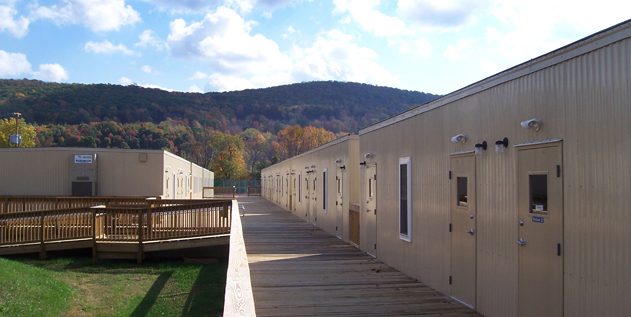
Temporary Housing North Dakota

Temporary housing has been a hot topic in northwestern North Dakota for several years as communities continually struggle to accommodate the thousands of new residents who have converged on the region to power the Bakken’s energy boom. Whether described as man camps, crew camps, workforce housing, or extended-stay hotels, temporary lodging has come to be viewed by some as a necessary evil that should exist only until permanent housing is built; others see it as the solution to what may be a long-term, but still temporary, population explosion.

As other counties throughout the region grapple with how to prepare for an onslaught of construction workers as large projects such as fertilizer plants and diesel refineries are built, the topic of temporary versus permanent housing is no longer just a Williston Basin issue. Do you encourage new developments with the hopes of attracting new permanent residents, or do you embrace temporary housing? If you allow temporary housing, how do you control the quality of the operations? It’s up to each county to determine regulations and housing strategies, but thanks to the last several years of boom times in western North Dakota, there are now examples for others to learn from.


Heart of the matter

Williams County, which includes the city of Williston, has had the often unenviable experience of being the epicenter of the largest oil boom of our time. For half a decade, the county has served as Ground Zero for magnificent growth, and all of its side effects. Crew camp lodges and RV parks of varying degrees of quality began springing up seemingly overnight as the boom began and provided shelter for workers when other housing wasn’t available. They have now become common sights along the roadways of Williams County, but county officials would prefer to limit, and eventually eliminate, temporary housing in favor of newly built permanent residences. In 2011, the county placed a moratorium on new temporary housing units while it evaluated options and growth patterns, allowing only those with previously approved permits to operate. After two years of deliberations, the commission recently decided to gradually phase-out existing temporary housing facilities. As part of the decision, RV parks in the county will be allowed to operate only until October 2014. Other temporary housing facilities must apply for conditional use permits and, if approved, will be allowed to operate until 2015.


Frustrating situation

For operators of temporary housing facilities, the county’s delayed decision making has meant two years of uncertainty and frustration. Target Logistics, the largest provider of turnkey workforce housing in the U.S., provides more than 4,000 beds in the state, about half of which are spread throughout seven facilities within Williams County. Travis Kelly, Target Logistics’ North Dakota region vice president, says that as a resident of Williston he understands the county’s desire to re-evaluate the housing situation and encourage permanent residents to join the community, but he is frustrated with the length of time the county took to make a decision and believes that eliminating temporary housing is not the most effective way to encourage workers to make the Williston Basin their permanent home.

“I understand the desire for growth in the community,” he says. “I get it. The more rooftops you get in, the more attractive of a community it is to bring in some of the larger department stores, which is going to enhance the quality of life and hopefully attract more families. But I think that’s going to happen naturally. You will attract some families to come here and make it home, it’s just not going to be at the scale the county would like.”

Of the more than 2,500 beds under Target Logistics roofs in Williams County, the number of vacant spaces at those facilities in mid-July numbered in the single digits. Target Logistics’ properties are consistently fully booked in the area but Kelly says he agrees with the county’s position that the market for temporary lodging in Williams County is fairly saturated, adding that if it were allowed to expand, Target Logistics would only add about 100 to 200 new beds in the Williston area. However, he emphasizes that the existing temporary housing serves a legitimate need, which will continue for several years, and offers more positives than negatives to the region. For example, while it is widely held that the Williston Basin boom will last for at least 20 years, should the boom suddenly go bust, temporary facilities are made to be moved and leave no lasting impact on the county’s infrastructure, whereas permanent housing would be vacated and left to the community to deal with. And while there may be a portion of workers who would like to obtain permanent housing, many of the region’s newcomers are working their way out of debt and need time to establish good credit history before they can qualify for financing to buy a home. “I think there are people who want to make this their home and be back together as a family, but it’s going to take a little more time,” he says. “You don’t crawl out of debt to purchase a home in 12 months.”

Kelly says another concern he has with the county’s phase-out plan is that there doesn’t seem to be a reasonable plan to accommodate residents of RV parks elsewhere when those camps are banned. “I think they’ve painted themselves into a corner somewhat in the fact that by the time the RVs have to go, those folks either have to buy a home, find an apartment to lease, or they’re just gone all together,” he says. “And we know that’s not going to happen. They’ll just find a better place to hide.”


Uncertain impacts

Will the hiding place become surrounding counties that do not have the same types of restrictions in place? That remains to be seen, but it is a likely possibility. Ray Pacheco, Williams County planning director, says he’s not sure what impact the county’s phase-out plan will have on bordering counties and that the counties have not worked together to develop to a regional plan. “County and city planners are so busy that it’s hard to get together and brainstorm or come up with solutions,” he says. “There are a lot of good things you can take from other counties. We just don’t have a lot of time to sit and chat.”

Pacheco says he hasn’t heard any complaints from temporary housing operators regarding the phase-out plan, but he also agrees that temporary facilities are a necessary solution to Williams County’s housing issues, at least for now. “Until housing prices and rent prices drop, it will be hard for a lot of these companies to kick their employees out in a sense and say, ‘Now you have to go find an apartment,’ when nobody can afford the rent,” he says. “Just because [apartments and houses] are available, it doesn’t mean these guys are going to rush in and rent them, especially if they’re trying to bring their families here. The prices are just way too high at this point.”

With available housing priced out of the individual buyer’s range and temporary housing options eliminated, Kelly suggests that the outcome will be hundreds of unregulated “mini-man camps” consisting of houses that have been purchased by oil companies and used to provide lodging for a handful of workers. “That’s not how you grow a community,” he says. “I think the misconception is that if the oil company buys the house they’ll have the guy’s family move up and live in the house. That’s just not going to happen.”


Different state, same situation

Communities within the Permian Basin of Texas have been dealing with oil booms and busts since the 1920s. Compared to the Williston Basin, communities there have more infrastructure in place to accommodate new cycles of activity, but despite decades of experience, they continue to confront housing shortages with each boom and utilize temporary housing, to some extent, to fill the gap. Guy Edwards, economic development director for the Odessa Chamber of Commerce, says access to affordable housing is the No. 1 problem in the region and he expects it will be several years before available housing meets demand. He anticipates that when the housing supply catches up to demand, not all workers will seek permanent housing and some may not qualify for financing, so temporary housing will continue to serve a purpose for those workers. Odessa requires building permits for all temporary housing facilities, including RV parks, but the county does not, so most of the temporary housing in the county is located outside of city limits, he says.

According to Pecos Mayor Venetta Seals, available housing in the tiny town has become nearly non-existent and rental prices have skyrocketed, making temporary housing a necessity. Neither Pecos nor its county has restrictions on temporary housing, however, “we really don’t want any more,” she says. Currently, Pecos has one 200-bed facility in town. Three others are located outside city limits. Illegally parked RVs, of which there are many, are a major issue for the townspeople. Seals says she agrees that workforce housing provides a temporary means to an end, but the city would prefer to encourage the development of permanent housing at the risk of overbuilding. While she initially voted to allow workforce housing within the city, she does not anticipate approving plans for additional temporary housing units to be built within city limits. “I don’t know that I’d really want another one because we need those plots for permanent housing,” she says.


Plan ahead

Williams County may not have had the luxury of preplanning for its population explosion and the pros and cons of temporary housing, but Kelly and Pacheco recommend that communities in our region that are able to prepare for a sudden influx of workers can learn from what the county has been through and use that experience to their advantage.

For example, Kelly recommends that communities invite operators to the table to discuss what is possible and what is not when it comes to temporary housing facilities. “Education is a big thing,” he says. “I love to meet with communities and help them out. I understand as a resident what I’d like to see and what I wouldn’t like to see, but I also know what’s feasible and what is not.” He also urges other communities to put ordinances in place ahead of time and to establish permit fees for temporary housing and collect those fees before facilities are built. “That’s one thing Williams County didn’t do and it allowed a lot of these people who didn’t have any desire to operate a camp to go through the permitting process, get it ready and then try to dump it off on a third party that has no real vested interest in it,” he says.

Pacheco says he is willing to speak with fellow planners who are confronting similar issues to try to help resolve issues they may be facing. “Getting out of the office is not always the easiest thing when you’re going 24 hours a day on a job, but somehow it needs to be done.” PB

Written By: Kris Bevill Editor, Prairie Business

Source: http://www.prairiebizmag.com/event/article/id/15389/